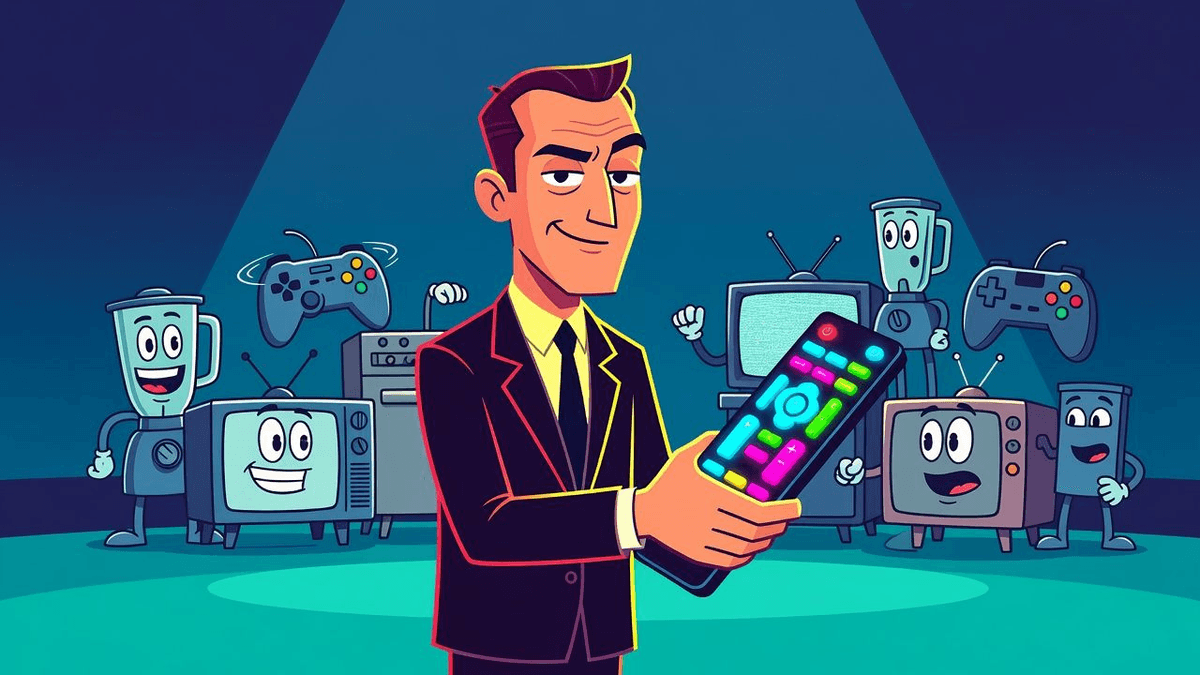
The dream of a single universal remote has always sounded straightforward: one device controlling every screen, speaker, and streaming box without hunting for the right clicker. Companies sold it as the obvious upgrade, a product that finally ends the pile of plastic on the coffee table.
Reality showed up wearing a software update. Each attempt turned into a maze of pairing modes, cloud accounts, and firmware that stopped working the week after support ended. The Harmony line got closer than most by learning device codes and scripting sequences, yet it still demanded users treat their living room like a small IT department.
PR language framed every shortfall as “expanding the ecosystem” or “future-proof integration.” Translation: the remote now needs its own app, Wi-Fi, and occasional restarts because the companies building it never solved the core problem of inconsistent device protocols. The result is an expensive gadget that works perfectly until you buy something new.
What looked like an impossible dream was mostly impossible execution. The hardware existed; the coordination between manufacturers never did.